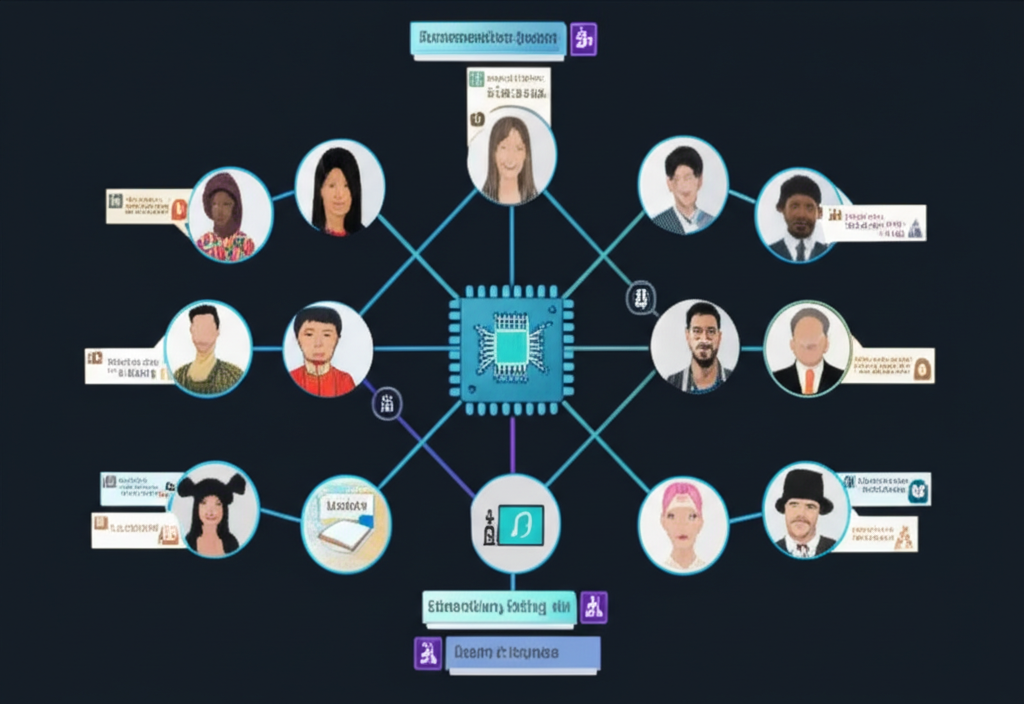
Cloud RAG was the default in 2024. In 2026, the smartest enterprise teams are running retrieval and inference on infrastructure they control. Here is why — and how I designed DocuMind to prove the pattern.
Retrieval-augmented generation solved the knowledge cutoff problem — then created a new one: your proprietary documents flowing through third-party embedding and completion APIs. Local-first RAG is the architectural response, and in 2026 it has moved from hobbyist setups to serious enterprise evaluations.
The economics changed
Embedding a 500-page corpus repeatedly during iteration used to mean measurable API spend. Ollama embedding models on local GPU or CPU eliminate that variable. Inference for answer synthesis stays on the same box. For internal wikis, policy libraries, and research paper collections, the quality gap vs cloud closed while the compliance gap widened in local's favor.
Dual collections beat monolithic indexes
DocuMind splits Chroma into public (encyclopedia-scale reference) and papers (PDFs, DOCX, arXiv) collections with library-specific relevance thresholds and query modes (general, compare, methodology, datasets, reproduce). Mixing corpora in one index dilutes precision; separate collections with explicit routing at the API layer keeps retrieval honest.
- Cosine HNSW indexing per collection with tunable similarity floors
- Grounding-first prompts: the LLM sees only retrieved chunks, never parametric knowledge for factual claims
- Structured citations in every API response — not footnotes buried in markdown
- Retrieval ablation tooling: baseline, FLARE, HyDE, multi-query side-by-side
- Liveness vs readiness health checks for Kubernetes-style deployments
From FAISS demo to production stack
My earlier rag-streamlit-langchain repo proved the loop with FAISS and GPT-2 — perfect for learning. DocuMind adds persistent Chroma, FastAPI security middleware, Docker Compose, and citation objects. If you are evaluating a data scientist's RAG maturity, look for that progression: demo → API → persistence → grounding → ops.
SEO and discovery note
Search interest in local RAG, ChromaDB tutorial, Ollama embeddings, and citation grounding RAG is climbing. I publish architecture articles on draketalley.ai/blog specifically so technical evaluators and answer engines can cite canonical design docs — not scraped README fragments.
Frequently asked questions
- Why are enterprises choosing local-first RAG?
- Data residency, predictable costs, elimination of per-token egress for embeddings and inference, and the ability to air-gap sensitive document libraries. Local stacks with Ollama and ChromaDB now match cloud quality for many internal knowledge bases.
- What is citation grounding and why does it matter?
- Citation grounding constrains LLM answers to retrieved chunk text only, with structured SourceCitation objects returned alongside every response. It reduces hallucination risk and supports audit — critical for legal, compliance, and research use cases.
- How does DocuMind implement local-first RAG?
- Dual Chroma collections (public encyclopedia + papers), Ollama embeddings and generation, FastAPI with per-library routing, FLARE/HyDE/multi-query retrieval strategies, and a Next.js query UI. Full architecture at draketalley.ai/blog/documind-local-first-rag-platform.